
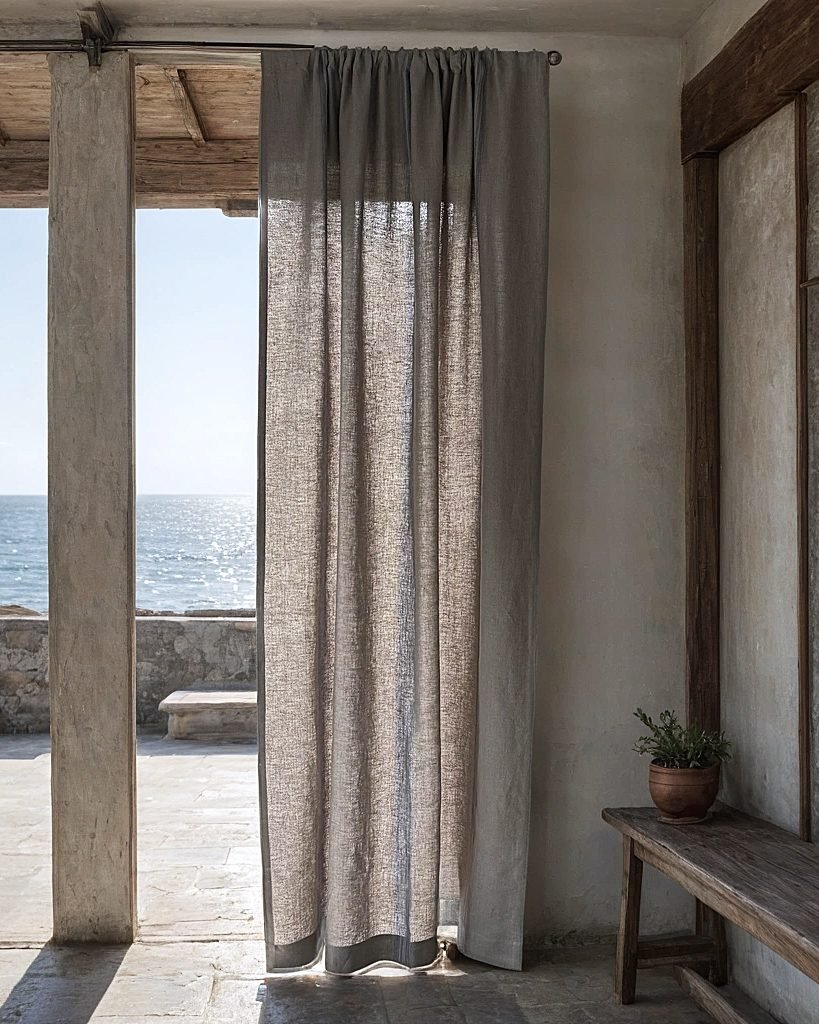
Ever buy curtains that looked gorgeous online—but once you hung them, they either stood like cardboard or drooped like wet noodles?
Yeah, same. 🙃
If you’ve ever dealt with curtains that refuse to fall naturally, or fabric that crunches instead of flows, you’re not alone. Heavy linen curtains sound dreamy, but if they don’t hang right, they’ll ruin the whole room vibe. The good news? When done right, heavy linen drapes can hang beautifully—no stiffness, no slop. Just that perfect “drape and flow” look that makes a space feel curated but lived-in.
Let’s talk about how.
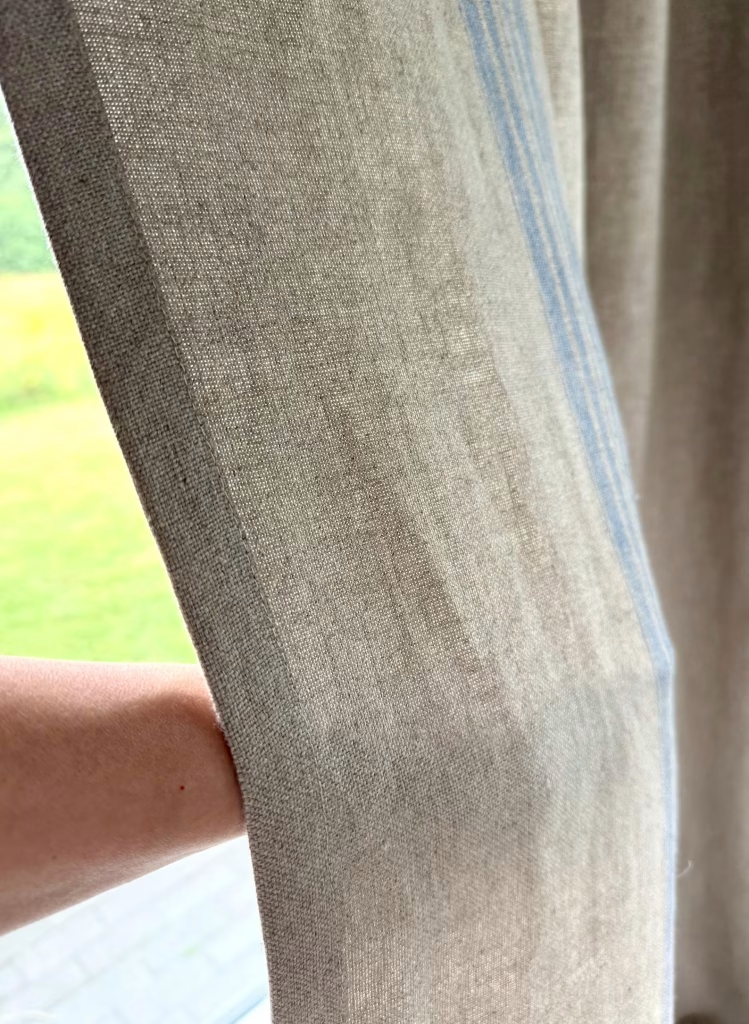
Heavy linen curtains need weight – but not stiffness
Heavy linen curtains have a bit of a reputation. People either think they’re luxurious and textural, or stiff and impossible. Honestly? They’re both… depending on what linen you’re actually buying.
Not all “heavy linen” is created equal
Here’s the thing:
Weight doesn’t equal stiffness. That myth needs to go.
A good 260–320 g/m² linen is heavy enough to drape without flapping in the breeze but soft enough to hang naturally—especially if it’s prewashed and not coated in synthetic junk.
If it crinkles like paper, it’ll hang like it too
So many “heavyweight curtains” are actually coated cotton blends or poly pretending to be linen. The result? Curtains that fold in stiff pleats or never relax. Real, washed European linen breaks that rule: it’s soft, breathable, and has just enough texture to look effortless.
What makes heavy linen hang well? It’s all in the weave and prep
You don’t need magic to make heavy linen curtains hang right—you just need the right materials and techniques.
Choose softened, not raw, linen
Softened (prewashed) linen has already gone through a gentle wash cycle, which breaks in the fibers and helps it fall more naturally from day one.
- Avoid untreated raw linen unless you’re into ironing and wrestling fabric weekly.
- Prewashed linen = fewer creases, softer hand-feel, better drape.
Look for a tight weave, but not stiff
Loose weaves? They flop.
Too tight? They crunch.
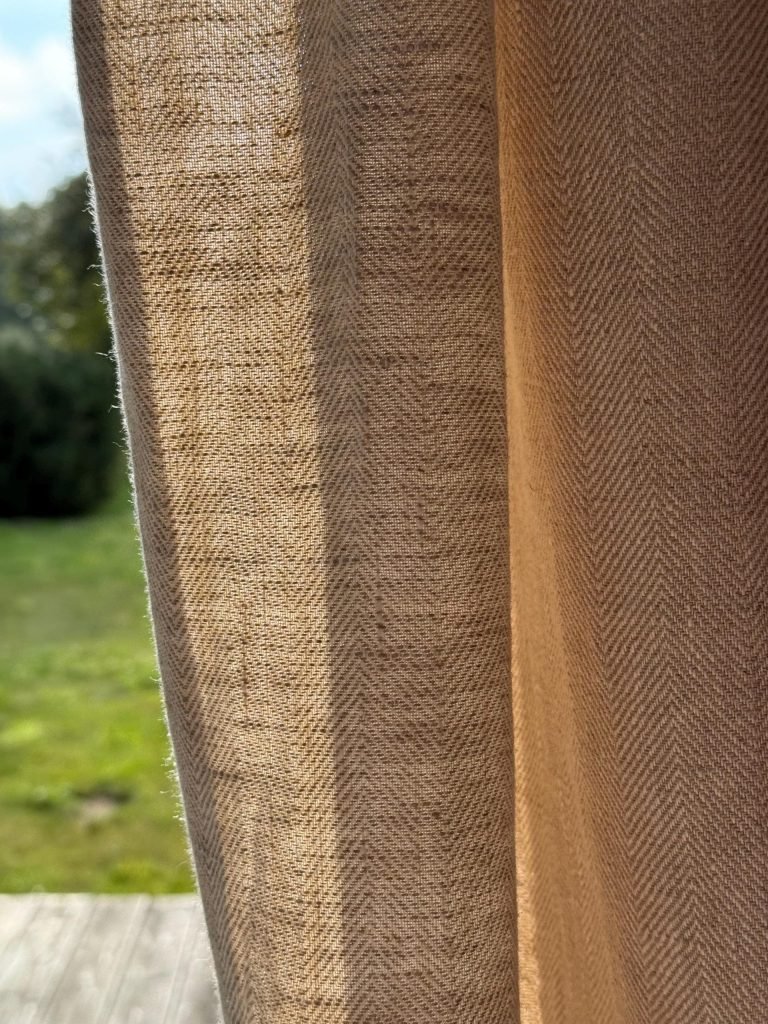
A herringbone weave or dense plain weave gives structure without rigidity. That’s why many designers go for mid-heavy weight herringbone linen—it holds shape without feeling rigid.
Hanging technique matters more than you think
Let’s be real—even the best fabric won’t save you from a bad curtain rod or wrong hanging method.
Rod pocket vs curtain rings vs pinch pleats
If your heavy linen drapes look sad, ask yourself: are you giving them the chance to shine?
- Curtain rings with clips or hooks let linen move freely. It adds air between folds, creating that soft, romantic fall.
- Rod pockets work too—but only if the linen isn’t bunched tight.
- Pinch pleats or French pleats? Beautiful, but only if sewn properly with good spacing.
👉 Pro tip: Hang them a few centimeters wider than the window and closer to the ceiling for instant elevation. Literally.
The secret weapon: gravity and time
Want your heavy linen curtains to hang naturally? Let gravity do its thing.
The break-in period is real
When you first hang real linen, it might look a little puffy or crinkled. That’s normal. Within a few days:
- The weight starts pulling the fabric down evenly
- Creases soften
- The texture relaxes into natural waves
No need to iron everything perfectly (unless you enjoy that sort of thing—no judgment 😅).
You can speed it up, though
- Lightly spritz with water after hanging
- Run a garment steamer along the bottom third only (the top will follow)
- Pull the panels slightly each day like you’re teasing out the folds
Why heavy linen beats synthetics every time
We’ve all been tempted by polyester or poly-blend curtains that promise “luxury blackout” and arrive looking like a cheap prom dress.
Here’s why natural linen wins—especially when it’s heavy and well-made.
What linen does better:
- Soft light diffusion – not blackout, but soft-filtered daylight
- Texture and depth – looks expensive without being shiny
- Temperature regulation – linen breathes (great for sunny rooms!)
- Durability – gets better with age, not worse
And IMO? There’s nothing more satisfying than the imperfect elegance of wrinkled linen that just looks like it belongs.
Common mistakes (and how to avoid them)
Let’s save you some headaches, shall we?
Don’t make these curtain mistakes:
- Using a skinny rod – heavy linen needs a strong, stable curtain rod, ideally 2–3 cm in diameter
- Hanging too short – always aim for either just brushing the floor or a gentle puddle (1–3 cm)
- Skipping the lining without checking the sun – linen is strong, but a sheer white lining can extend fabric life and create a layered look
- Buying “linen look” instead of linen – nope, not the same. Ever.
Where to use heavy linen curtains (and where not to)
Heavy linen curtains are perfect for:
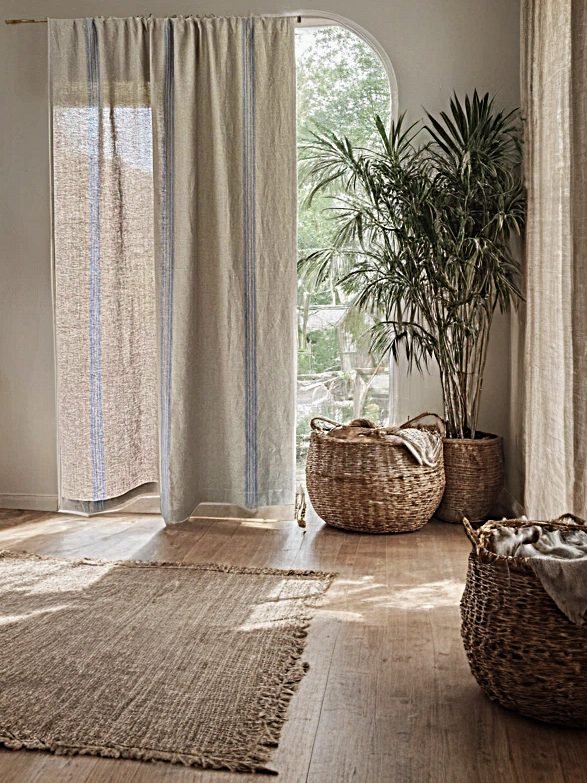
- Living rooms with big windows
- Bedrooms that need softness, not full blackout
- Dining areas where you want warmth + texture
- Farmhouse, Scandinavian, and French country interiors
But probably skip them if:
- You want total blackout (unless paired with a lining)
- Your space has lots of humidity (e.g. some bathrooms)
- You’re allergic to any form of natural wrinkle 🙃
But will they wrinkle too much?
Short answer? Yes, and that’s the point.
Linen wrinkles. That’s like asking if velvet has texture.
But heavy linen wrinkles differently: the folds become character, not chaos.
Still nervous? Try:
- A heavier weight (320 gsm wrinkles less than 180)
- Prewashed versions
- Using curtain tiebacks during the day—they help “train” the folds
Final thoughts: Beauty is in the (slightly wrinkled) fall
So yeah—heavy linen curtains that hang well do exist. But only if you’re picky about the right kind of linen, the way you hang them, and (tbh) your expectations.
They’re not flawless, flat, or rigid. They move with air, soften the light, and look like someone thoughtful lives here. Which, I’m guessing, is what you’re going for. 😉
Your 3-step curtain glow-up:
- Choose real linen. Not the look. Not the blend. The real deal.
- Hang it with space and intention – curtain rings, strong rod, and ceiling height matter.
- Let it breathe. Creases will fall. Texture will form. Compliments will come.
Ready to try the linen that actually behaves like it should?
Start with your favorite color here → Hugmelinen curtains

